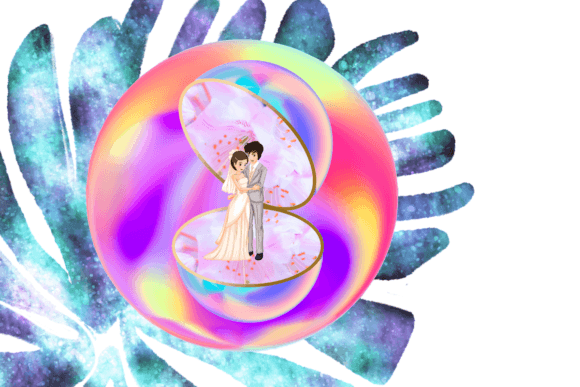
Prisma Wedding Love: When Emotion Crystallizes into Design
There is a specific moment in design where a concept stops being abstract and becomes tangible. We often see this in the wedding industry, where the "Prisma Wedding Love" aesthetic takes the chaotic spectrum of emotion—excitement, nerves, profound affection—and filters it through a lens of clarity. The phrase "Love Can Crystalize Thing" is more than just a poetic sentiment; it is a design philosophy. It suggests that when we take raw feelings and apply structure, pressure, and light to them, we get something solid, permanent, and beautiful. For designers, entrepreneurs, and content creators, understanding how to capture this "crystallized" energy in typography is the key to creating work that doesn't just look good, but feels resonant.
We have all seen the "arcane prism" mentioned in creative briefs—the idea that life is a mystery, but design helps us make sense of it. In the context of branding and typography, the Prisma Wedding Love style represents the bridge between the dreamy, holographic unknown and the sharp reality of a printed invitation or a website header. It is about taking that "gradient hologram" feeling—those shifting colors and half-circles that seem to float in space—and grounding it in legibility and purpose.
Translating Holographic Dreams into Brand Identity
When we talk about a premium font or a typeface that can "crystallize" a message, we are talking about visual consistency. If you are a small business owner in the wedding space, or perhaps a lifestyle blogger, your audience is looking for that "gorgeous looking" wall art vibe translated into your daily content. They want to feel that "beautiful and dreamy view" that makes an occasion glorified, whether that occasion is a wedding or simply reading your weekly newsletter.
The challenge lies in moving beyond the "perpetual tensions" of a cluttered design. Many creators get stuck in the "spectrum of unsolved life stories," meaning they have too many ideas and not enough structure. This is where the right typography acts as a prism. It takes the white light of your raw idea and refracts it into a structured, colorful spectrum that your audience can understand.
Consider the practical application of this in your design assets. You want a font that feels like a "gradient hologram"—shifting, modern, and full of depth—but functions like a crystal. It needs to be hard, clear, and readable.
The Anatomy of a Crystallized Typeface
What makes a typeface suitable for this "Prisma" aesthetic? It usually comes down to the interplay between sharp geometry and soft curves. A good display font in this category might feature:
- Geometric Precision: Like the half-circles arranged for a Bride and Groom, the letterforms should feel intentional. Whether it is a modern sans serif font or a structured serif font, the geometry provides the "crystal" structure.
- Variable Weight or Texture: To mimic the "holographic" feel, look for fonts that offer texture or variable weights. This allows you to play with opacity and layering, creating that depth associated with 3D elements.
- High Legibility at Scale: A crystal is useless if you can't see through it. A font needs high readability for both web design and print materials. It must work on a small business card and a large poster without losing its "glow."
When selecting a premium font for a project, don't just look at the "A-Z." Look at the punctuation and the numerals. In editorial design and packaging design, the details of the ampersand (&) or the way the numbers sit on the baseline can make or break the professional presentation. A well-designed character set ensures that your brand identity remains polished, even in the smallest details.
Practical Applications: From Digital Screens to Physical Walls
The beauty of a versatile typeface is that it allows you to maintain visual consistency across disparate mediums. The prompt mentions "Digital Downloadable printable wall art," which is a perfect example of a product that lives in two worlds: it is sold digitally but consumed physically. Your typography needs to bridge that gap.
If you are designing social media graphics, you need a font that pops on a small mobile screen. This is where a bold, modern typography style shines. It cuts through the noise of the feed, acting like that "prism" that captures attention. However, when that same design is printed as a poster or merchandise, the resolution and the vector paths of the font become critical. You need a typeface that scales infinitely without pixelating, ensuring that the "beautiful and dreamy view" remains intact.
Here are a few specific scenarios where a crystallized, high-quality font elevates the work:
- Logo Design: A logo must be a distillation of the brand. Using a font with sharp, crystal-like edges can convey precision and luxury, ideal for high-end services or tech startups.
- Packaging Design: Think about the "unboxing experience." Typography that plays with light and shadow (perhaps using a script font for a personal touch combined with a sans serif for the details) can make the physical object feel precious.
- Invitations and Stationery: This is where the "Wedding Love" aspect comes in. A handwritten font or a flowing script can capture the intimacy of the occasion, but it must be legible. The best script fonts balance artistic flair with readability.
- Web Design: On a website, fonts load differently than in a static image. Choosing a web-optimized version of your display font ensures that the "holographic" effect of your design isn't ruined by slow load times or rendering glitches.
Mastering Font Pairing for Maximum Impact
One of the most effective ways to achieve the "Prisma" look is through font pairing. You are essentially creating your own prism by combining different light sources. A common mistake is pairing two fonts that are too similar; they clash rather than complement.
Instead, look for contrast. If your primary display font is a bold, geometric sans serif, pair it with a delicate, airy script font for accents. This creates a hierarchy that guides the viewer's eye. The bold text establishes the structure (the crystal), while the script text adds the emotion (the love).
When testing pairings, consider the "tone" of the project. Are you designing for a corporate client who values stability? Lean toward classic serif and sans serif combinations. Are you working on a creative project for a boutique or a blogger? Mix a modern display font with a clean, humanist sans serif. The goal is to create a visual rhythm that feels natural to read.
The Business Value of High-Quality Typography
For entrepreneurs and content creators, time is money. We often spend hours searching for the "perfect" free font, only to find it lacks the necessary characters or has licensing restrictions that prevent us from using it on merchandise. Investing in a commercial font or a premium font bundle is a business decision, not just an aesthetic one.
When you purchase a high-quality font, you are buying reliability. You are buying the assurance that the kerning (the space between letters) has been manually adjusted by a professional. You are buying the peace of mind that comes with a commercial license, allowing you to use the font on products for sale without legal risk.
Furthermore, a unique typeface helps build brand recognition. In a crowded market, looking "standard" is a risk. If your marketing assets use the same default fonts as everyone else, you blend into the background. A distinctive font—whether it's a quirky handwritten font or a sharp, futuristic display font—becomes synonymous with your brand voice. It tells your audience, "I pay attention to details. I value quality."
Final Thoughts on Crystallizing Your Vision
The concept that "Love Can Crystalize Thing" applies directly to the design process. We start with a vague feeling or a rough idea. Through the application of the right tools—specifically, the right typography—we can solidify that idea into something tangible and impactful.
Whether you are creating a wedding invitation, a brand identity guide, or a set of social media posts, look for typefaces that offer both beauty and utility. Look for that balance between the "arcane prism" of artistic expression and the solid ground of readability. When you find a font that captures that "beautiful and dreamy view" while maintaining professional rigor, you haven't just found a design asset; you've found a partner in your creative journey. That is the true power of crystallized design.